Event Farm
  • Solutions
    • Registration
    • Check-In
    • Engagement
    • Attendee App
    • Exhibitor Experience
    • Zoom Events
    • Event Safety
    • COVID Testing
  • Partners
  • Blog
  • Login
  • Request Demo
  • Pricing
Event Farm

Ryan Costello

20Jun

Corporate Luxury Boxes Suck.

June 20, 2024 Ryan Costello Posts 37

Welcome to the mantra behind a massively successful new revenue growth strategy we call Branded Hospitality.

Lots of companies use hospitality as a tactic to win and retain customers. And most of the time that takes the form of sitting in some sort of stiff corporate luxury box at a sporting event or concert or even just going out to a dinner. While those can offer opportunities to connect with customers and prospects in a personal way, there’s a growing thought that it’s a tired strategy that doesn’t really work.

It’s not working because our expectations as humans are rapidly evolving.

It’s more difficult to get our attention and things we perceive as fun, engaging and worth it are harder to come by. Simply put, with more luxuries in our everyday lives (ie. on demand services, conveniences, high quality experiences etc) we just expect more today.

I don’t know about you, but when I hear someone offer for me “to come to a corporate luxury box” I immediately think ughh… this is going to feel like work. It’s going to be stiff, have crappy food and be boring as all hell. I’ll probably even get some product brochure that I’ll undoubtedly throw in the trash.

Branded Hospitality ensures that’s never how attendees feel. It most often happens when a company puts on an exclusive activation surrounding a larger event (i.e Super Bowl, Olympics, CES, Formula 1, etc). Instead of just giving people tickets to these events and sitting next to them, the most successful brands are producing their own experiences.

They are brand immersive. They are engaging. They’re catered to the attendee. They are designed to “wow” and create brand enthusiasts.

There’s no doubt that Branded hospitality works. The challenge is that a lot goes into making these experiences.

Want to learn more? We’ll dive into the subtle but critical tactics that are needed to make your hospitality turn into a revenue generation engine. Look out for Part 2 coming soon!

Read more
05Jan

Top 7 Event Trends Expected in 2023

January 5, 2023 Ryan Costello Posts 257

A new year is here and event planners everywhere are looking ahead to the future of the event industry. Here are the top trends that I’m predicting will shape the future of 2023 event experiences. From virtual events to sustainability and beyond, these 7 trend predictions will help prepare event professionals for what’s in store in an industry that is constantly evolving.

1) Experience-First Events

As the event industry continues to regain momentum, one thing remains clear—experience-first events matter more than ever. After months of social distancing and virtual events, people are seeking experiences that make them feel connected to others. 

That’s why event professionals need to focus on creating truly unforgettable experiences that attendees can’t get from a computer screen. This requires out-of-the-box thinking and intentional experience mapping to utilize every inch of an event space to create immersive activations and engaging activities. In 2023, you can expect to see: 

  • A focus on providing guests with multi-sensory experiences. It’s not enough to just sit and watch—events now must excite, immerse, engage and surprise.
  • Dead spaces in venues will be reimagined to interactive areas, such as photo booths, art galleries, networking hubs, or virtual reality gaming zones. 
  • The tried-and-true menus are gone; food and drinks will be elevated to create unique sensory experiences with memorable flavors, smells,  and presentations.
  • More usage of unusual venues like rustic warehouses or historic buildings to deliver more unique and memorable events. 

Event Farm experiential (EFx) tools elevate attendee engagement by creating fun and personalized experiences while capturing invaluable data to measure engagement and ROI.

2) Renewed Focus on Sustainability

With an increasing focus on the universal health of both the planet and its people, sustainability continues to be a hot topic—and one that event professionals cannot ignore. From reducing waste to using eco-friendly materials, we’ll continue to see the event industry playing a big role in sustainability.

Fortunately, while the idea of a 100% sustainable and zero-waste event may seem impossible or out of budget, there are many ways to increase sustainability efforts at any event.

Where possible, pick sustainable products

One of the most effective ways to reduce waste in event planning is by emphasizing the use of reusable and recyclable materials. By providing reusable bottles and utensils, as well as recyclable materials such as cups and plates, event organizers can drastically reduce their environmental impact. Additionally, event organizers should ensure that any materials used during their event can be recycled or repurposed, instead of being thrown away. 

Focus on digital marketing

It’s easy to reduce waste in the event industry by simply leveraging digital marketing and content delivery. By relying more on digital channels like emails, social media campaigns, or onsite electronic content delivery, event organizers can reduce the amount of paper needed for posters, brochures, etc. 

Rethink your SWAG

Rethink your event SWAG and giveaway offerings and opt for more environmentally friendly options that are reusable or recycled. Another idea is to have a charitable focus and challenge your event community to give back in neat ways. Get creative on this and see how you can weave your cause into the overall event programming and outcomes for a bigger impact.

Don’t forget the transportation

Where possible, prioritize sustainable transportation options for your events. Share how to get to the event using public transportation, offer discount codes for ride sharing options, or encourage carpooling and gamify it by offering a prize for the best rendition of “Carpool Karaoke.” All are great ways to reduce emissions associated with attending events. 

Use your event as an opportunity to educate

At the end of the day,  event professionals can make a massive impact by teaching attendees more about sustainability and sustainable practices. Incorporate this topic into the programming, think tanks, networking conversations, etc. Remember you are bringing people together so leverage the opportunity to create a larger community of overall environmentally-conscious consumers!

3) Elevating In-Person Events with Tech

In-person events may be making a big comeback, but from here on out, they’ll be supplemented by event technology that has become even more important over the past few years. Event organizers and companies need to combine the two seamlessly in order to keep up with event trends, hybrid expectations, and attendee behaviors.

Here are some easy ideas you might “a la carte” your tech stack at your next big event. 

Video, Video, Video

From live streams, virtual event platforms and attendee apps with video conferencing capabilities, using video is a great way to engage those who can’t be there (and to connect them with the people that made it!)

Create a digital memory bank

Let attendees capture and relive their favorite event moments whenever they’d like via a digital memory bank. Digital memory banks are a unique and personalized way to remind attendees of all the positive emotions and interactions they were experiencing at your event. Leverage it as a tool to reminisce, build hype for future events and to create a real event community.

Streamline ticketing, registration, and health protocols

The best thing about tech is its capacity to make hard jobs easier and nowhere is that better seen than in the world of ticketing, registration, and event protocols. Event-focused platforms (like the one Event Farm produces), can not only handle the registration and access points, but can also verify health status for COVID and encourage engagement with online surveys and tools, and even provide engaging opportunities for your attendees to engage and connect. 

Incorporate AR and VR options

The worlds of augmented and virtual reality are closer than we may think, and providing opportunities in these arenas is still a futuristic path —although a path that can have big returns. By incorporating these new technologies, you can be ahead of the curve, and create an experience that your attendees will remember for a lifetime. 

4) Event Staff with a Marketing Mindset

As the event industry grows, event professionals must have a content-creation mindset to stay relevant and engage their attendees and greater audience. Find staff and volunteers that can act as content creators and marketers who can share various perspectives of the same event. This can help draw more attention to the event plus generate buzz and new audiences.  

Empower your staff and volunteers

By empowering staff and volunteers to take ownership of the event and create content that they are passionate about—like photographs, videos, or even written content—event professionals can create an arsenal of content that speaks to unique experiences at the same event. Additionally, this creates an atmosphere of collaboration and camaraderie among staff and attendees.

Create a central hub for content

Create a central hub for all the types of content that may come in, and repurpose it under your own brand guidelines. 

Boost your social media channels

Social media is great for sharing multiple perspectives of the same event. Whether it’s sharing photos on Instagram, posts on LinkedIn, videos on TikTok, or tweets on Twitter, having staff and volunteers actively engaging on these platforms can help spread awareness about the event and its exciting atmosphere.

5) Innovative Strategies and Creativity

With tight budgets, an emphasis on experiences, and an increasing need to stand out from the competition, event organizers are having to get creative with their event strategies. In order to make sure events have maximum impact in 2023, event profs need to look into innovative ideas and event trends now.

As a first step, event profs need to use their imagination and look for ways to make events more immersive, meaningful, and unforgettable. This includes creating themed events, incorporating interactive activities, games, and technologies, and providing exclusive experiences. 

6) Increased Focus on Diversity and Inclusivity

We can expect to see a continued and more keen focus on diversity and inclusion in 2023 events. This means extra steps to ensure that all attendees feel welcome and included, and can participate fully in every experience that is offered. 

Create enhanced offerings that cater to all members of an audience, no matter their language background. Use tech to help as there are solutions available that can be used for those attendees who may be hard of hearing or seeing. Ensure you have a registration question to capture if an attendee needs additional assistance and have a plan for how to accommodate the request.

Remember to ensure your event programming also reflects the values of diversity and inclusivity. Ensure you feature a wide range of speakers from different backgrounds and cultures, and even include discussion topics that explore different perspectives.

7) More New Players in the Event Universe

As an industry that is constantly evolving there’s no doubt that there will be more growth and new players entering the space. From event tech solutions to event services to event production companies. Your team may now include staff, volunteers, planners, and speakers—plus the tech team, your engagement groups, and others. Keep an open mindset and find the right people, products, and services that can help you obtain ROI and best meet your event goals. 

Engagement is everything and having the right tools in place in 2023 can help you create unforgettable events that achieve results. For more information on how Event Farm’s suite of tools can help you create purposeful, engaging, and personalized event experiences request a demo now.

Read more
22Apr

Blockchain and NFTs for Events – Part 1: A Beginner’s Guide

April 22, 2022 Ryan Costello Posts 264

This is a multi-part post that will walk you through the implications of Blockchains and NFTs for the events industry. In part one we’ll discuss what they are, how they work, and some basic applications happening today. In our following posts, we’ll dive deeper into execution, the creative process, and business examples.

I hope this is a helpful unpacking of a lot of technical buzzwords. Here goes….

First, A Little Background

To frame this conversation, one of the reasons I love the events industry so much is that it’s constantly changing.  At the end of the day, we are in the human behavior business and so as event pros, our job requires us to keep up with the new societal trends, interests, and concerns in the world.  If we are current, relevant, and authentic we can attract an engaged audience and we’ll drive our intended business outcomes.  

Without question, event safety and the virtual/hybrid event evolution have dominated most of our attention in the last few years.  But in the background, a massive new event industry trend has also emerged.  With the continued maturation of Blockchain technology and its increased applicability for use cases beyond cryptocurrency, it’s become more and more “mainstream” which means if we want to stay culturally current as Event Pros we need to lean in.

To cut to the chase, the two new most important concepts that the blockchain is introducing for the events industry are:

  1. New approaches to ticketing
  2. NFT’s as a new revenue stream and an audience engagement tactic

Yes, you read that right…..NFTs can make your event more money, drive engagement and build your community. 

So… What is a Blockchain?

A blockchain is simply a database of records. I like to think of it as a transaction ledger.  “Ryan purchased asset X for price Y on this date”. But in regular databases, there is one computer that holds a master copy of the data. In a blockchain, the database is shared across multiple computers in a network (i.e the internet). With many computers storing identical copies of the data, the blockchain is inherently “decentralized” and not controlled by a single entity (i.e. individual, company or government). And when everyone can easily validate against the system of record it opens up much more business opportunity. 

So far so good? Good!

Now let’s bring the blockchain concept to events. On the ticketing side of things, blockchain is being viewed as a way to help with security, identity, fraud, scalping, etc. It can more openly validate who originally purchased a ticket and the subsequent transactions that may occur after. “Does the person I’m buying this ticket from actually own it?” is a rudimentary example. 

It can also make purchasing tickets with cryptocurrencies easier since they are already on a blockchain as well. If you can accommodate these transactions you will naturally increase business opportunities as more and more people own those currencies.

While these are certainly technically innovative topics, they are primarily only relevant in larger format, ticketed event environments: concerts, sports, festivals, etc. and they are transactional in nature in my opinion. I’m personally more interested in the creative and significant business opportunities NFTs can bring to the corporate and non-profit events industry.  But before we leave ticketing entirely, I do want to acknowledge that digital tickets are also becoming NFTs themselves as well. You can think of that like a digital representation of your ticket stub. Essentially, digital memorabilia. 

Understanding the NFT Universe

NFT stands for “non-fungible token,” but in layman’s terms, it’s any sort of digital asset, like a gif, a jpg, a video, a song, or a piece of digital art. The difference between an NFT and any other digital asset though, is that it is registered on a blockchain. 

When that happens, and that digital asset or “token” is listed on the blockchain register, it essentially becomes certified or “non-fungible”. The register says what it is and who owns it.  Think of this exactly like a deed to a house. 

So, for example, a graphic artist can create some sort of digital image—something completely unique—and make only 100 copies available. Now, you and I both know that in this internet-centric age anything digital can be easily passed along, duplicated or screen grabbed, but in the world of NFTs, you can verify the authenticity of those 100 copies on the blockchain. So “fakes” are easy to catch. 

NFTs are also inherently transferable. There are many online marketplaces for these digital assets, OpenSea is probably the most popular example today. So just like you might sell a piece of physical art, or a signed football jersey, on eBay, Craigslist, Etsy, etc you can also sell an NFT.  And similar to that art, or jersey, the rarity of what is being offered makes it more and more valuable. NFTs have value because they have confirmed authenticity, built in scarcity, and are transferable by certified transactions. Economics 101: supply and demand. 

So What Now?  Part 2

Now that we understand the basics of what Blockchains and NFTs are and how they work, your next questions should be: 

  • Can I really make more money from this?
  • How can I make an NFT?
  • What can my NFT be?
  • What are some creative ideas or examples of NFTs?
  • How do I issue them?
  • How do I offer them to my attendees?
  • How do I use them to drive engagement?

These are all the topics we’ll cover in our following posts.  Stay tuned!

To learn more about how Event Farm’s event engagement tools can help you turn events into experiences, request a demo.

Read more
06Apr

Event Safety is Actually Driving Attendee Engagement. Here’s How.

April 6, 2022 Ryan Costello Posts 241

Two years ago, no one would have thought that wellness safety would be such a huge part of the event industry. Sure, there were things we were concerned with—like the physical safety of attendees, as one might think of contraband checks, fire safety plans, and tidy cabling —but we’d been accustomed to those risks for years.

Today, not only are we planners faced with this enormous new challenge, but we’re also constantly chasing evolving health safety standards and guidance.  So it’s not surprising that in our most recent 2022 Event Industry Annual Survey, 57% of respondents indicated that their primary concern when planning in-person events amid the COVID-19 pandemic is attendee safety.

Unfortunately, with this intense focus on health and wellness, it’s been extraordinarily challenging for event professionals to a) get high in-person attendance rates and b) create engaging experiences for attendees.  

I get it, people are still gunshy. Attendees are still more likely to take a pass all together on your in-person event, especially if they have a virtual alternative.  And if they do show up, most of them are still pretty timid and not engaging like they used to.  As people whose job it is to bring humans together and leverage engagement to drive our business outcomes, this is a serious challenge.  So I spent some time thinking about how to navigate this. Here are some of my thoughts and observations. 

A CLEAR Example

I recently went to visit our partner, CLEAR, in New York. Before I could even get in the elevator to head up to their office I had to pass vaccination verification, booster verification, and a myriad of health protocols to prove I was COVID-free.  At first, it felt like an overwhelming burden: “You mean you’ll actually prevent me from coming in if I don’t jump through these hurdles even after I flew across the country?” But I have to say, once I got into their office, I felt transported back to the pre-COVID days. I knew everyone had complied with the exact same strict process. I immediately felt safe. People were even openly shaking hands and hugging. And the result? I came away from that meeting more energized, engaged, and optimistic than I had been in a long time.

The observation here for me is that it’s important to realize how much we shape attendee sentiment through our pre-event planning and our requirements. There are times we might ask for something that’s frustrating to an attendee—something that hopefully a robust communication plan can alleviate—but in the end, when we make people feel safe, they feel they have the freedom to actively participate in the experience. This is how we generate attendee engagement even while safety is a top concern; by putting plans in place that overwhelmingly prove to them that we are taking care of them, taking care of us.  

Setting the Stage

Another observation I’ve had recently is that I’ve seen more and more event entrances look like  makeshift hospitals.  While that may make it evident that you’re focused on attendee wellness, is that the first impression you want to welcome a crowd ready to engage?  

I’m wondering if there are more tasteful ways to manage our health and safety protocols? One idea that came out of Part V of our Pandemic Compliance & Safety at Live Events virtual series, was to offer/require at-home COVID testing with video proctoring, instead of having onsite staff with lab coats at the door swabbing noses.  If everyone shows up having completed your requirements for admittance and you can verify that before the event and at the door, you’ll quickly have an environment like I experienced at the CLEAR offices. 

Backup Plans

If you’ve ever produced events, you know all too well that things don’t always go as planned and there will always be that small group of people that are extra challenging.  A behavioral observation that has caught my attention recently has been watching the airlines struggle with offering alcohol on flights during the pandemic because they’re concerned about the safety risk of frustrated and unruly passengers.  I think this is a very real concern for the events industry as well, and not just because there’s alcohol at events, but because there will likely be pent up frustration and fatigue with the requirements we push on to attendees. Given that, now more than ever, we need to think about what our back up plans will be. What if someone refuses to wear a mask?  What if someone fakes vaccination status?  These are the things that you should plan for in advance and communicate to your audience in a published code of conduct. 

The events that are thriving now are all proactively communicating their expectations of each and every constituent of the event—from speakers, to attendees, to event staff.  They’re not burying their plans at the bottom of the FAQ webpage. In turn what they’re getting is a group of attendees who feel like I did in New York, taken care of and excited to actively participate. 

Know and Serve Your Audience 

Another important observation/critique I’ve had recently of the events industry is that I’ve seen too many event organizers copy other event safety protocols as their own playbook. Or even simply defer to the “local regulations” to define their event requirements for their attendees. 

That has a few flaws: 

  1. No two audiences are the same 
  2. Your event use case or purpose may be drastically different 
  3. Your audience may need or want a unique safety comfort level to attend  

Take for example when Coachella announced that they wouldn’t be requiring any vaccination verification or negative test results to attend.  Does that mean all events should blindly follow their lead?  Absolutely not. Coachella made their decision based on their physical location (outside, warm weather, etc) and their audience demographic. They clearly feel they can deliver a high quality experience with the decisions they made. But can you imagine hosting a corporate all hands meeting? You’ll likely have a very different lens that you’re looking through in regards to wellness safety and employee engagement.  If I’m an employee being required to attend a corporate meeting I know I’d expect my employer to go above and beyond to ensure my safety. And could you imagine the negative business impact if a large number of employees get sick? Two drastically different scenarios.  Each event needs to choose what works best for them based on the business outcomes it’s trying to achieve.   

When it’s all said and done, a sense of safety, or lack thereof, undoubtedly shapes how attendees think about your event and ultimately their behavior/engagement.  People who feel safe and comfortable will obviously be more willing to come, stay, interact, and connect. As we continue moving forward in this more safety conscious society, I’m absolutely not suggesting we simply replace engagement with safety. Let’s create safe environments that meet our attendees’ expectations so that we can THEN create the most engaging experiences. 

To learn more about how Event Farm’s suite of event engagement tools can help you keep attendees safe and engaged at in-person events, download the brochure.

Read more
18Jan

Crafting the Event Experience: How to Wow Attendees Beyond the Door

January 18, 2022 Ryan Costello Posts 314

You are not event planners; you are experience makers. To craft event experiences that wow your attendees, work on shifting to an experience-maker mindset and self-image. Ryan Costello, co-founder of Event Farm and chief strategy officer at MemberSuite, shared this advice during WOWing Attendees Beyond the Door, the third workshop in our Crafting the Event Experience series.Missed Part 3 of Crafting the Event Experience Workshop w. Ryan Costello?Ryan uses the word “crafting” intentionally. Crafting an event experience starts with designing the event brand—a topic we covered in part 1 of the series. In that workshop, he introduced the tools we use for design inspiration when crafting event invitations (emails) and registration pages—the first touchpoints in the attendee journey. 

Look at Details from the Attendee Perspective

Ryan’s special guest, Margaret Launzel-Pennes, CEO of POP Experiential, shared her experience crafting philosophy: put on the attendee lens. Regardless of the event’s brand, structure, or client, focus on how the experience will feel for the attendee. 

Analyze every single touchpoint, not just the big stuff, but all the details too: checking in at the registration desk, sitting in a session, visiting the restroom, etc. Walk through an event experience mapping exercise so you can deliver on the promises you made in your emails and on your website. In our second workshop, Ryan discussed the different promises you have to make now about safety and the 20 pandemic-related changes to make in the attendee journey.

Take nothing for granted. No detail is too small, says Margaret. At pre-con meetings, share your experience expectations with everyone who touches the event—catering, greeters, vendors, and security—so you’re all on the same page.

Reverse Engineer Your Desired Outcomes

In the second workshop, we were also introduced to Costello’s conveyor belt, which shows how event experiences drive business outcomes. Experiences can’t just be cool; they must bring attendees along on a journey that leads to the business outcomes you desire.

When crafting an event experience, Ryan’s other special guest, Mark Roberts, Head of Experiential at POP Experiential, reverse engineers the whole thing. What does he want attendees (and his client) to think and say as they leave the event? What is their big takeaway from the experience? What quotes does he want to see in the press? He thinks about how he can design an experience that results in those outcomes.

Events (Ho-Hum) vs. Experiences (Wow)

Margaret isn’t trying to put on events. An event is a one-way engagement where content/entertainment is pushed at you. She’s interested in experiences. An experience triggers emotions in a two-way interaction, sparking curiosity and feedback. 

An event is a moment in time, says Mark. An experience lives beyond that specific moment. It lives within the attendee after the event because it created a meaningful, emotional engagement.

Mark says it’s time to break the rules. Experience makers are busting out of proven event formulas. We’re not returning to just physical events, so take advantage of the freedom you have to push the boundaries on experiential marketing, i.e., event experiences. We’re in a hybrid world, which is an opportunity for a broader reach beyond the physical walls of an event, where you can have more collaborators and reach more attendees, and seamlessly integrate the physical and virtual experiences so both audiences feel primary. He sees the experience maker’s goal as giving goosebumps in this virtual space.Event Farm experiential applications (EFx) level-up guest engagement by creating fun and personalized experiences, while capturing invaluable data to measure engagement and ROI.

Inspiration for Big and Low-Budget Event Experiences

With virtual reality, augmented reality, and 3-D technology, you can provide experiences that are more fantastical than real life. Mark talked about an event at a Comicon for the TV series, Mr. Mercedes, where fans could immerse themselves in the TV show’s virtual set. During the event, fans collected clues, unlocked new content and prizes, and took part in a photo experience that transformed their faces into shareable GIFs. 

This experience made attendees feel like they were in a different world, an exclusive world. It gave them technological goosebumps and shareable moments that lived beyond the walls of the physical event.

Sounds great, but who has a budget for that? Here’s the thing: “Wow” doesn’t have to cost a lot of money. Lighting and video projections go a long way. Think “scrappy not crappy,” says Mark. 

Ryan talked about a Charity Water fundraiser where, for a $5K donation, an attendee picked up two heavy jugs of water and walked around the perimeter of the room, emulating the walk taken to water sources by people in villages without clean water. This empathetic experience lands with you. It’s tough to make it around the room without stopping to rest and think about those who have to do this a few times a day.

For fundraising events, Margaret advises focusing on emotions, not money. For example, at a fundraising gala for a youth organization, inspire the attendee to get nostalgic by offering reminders of their childhood. Ask children served by the organization to write notes to attendees about the personal impact of their donations. Encourage people who donate to write back to a child. Trigger emotions and spark new memories.

Ryan recommends a “progressive” event experience. Don’t introduce all your event elements at once. Build a story. Change lighting and videos. Give a sense of a moving, alive experience, not a set-it-and-forget-it experience that feels dull after 20 minutes. You want attendees to feel like they can’t leave because something else might happen. Keep delighting and surprising them over and over again. 

Well-crafted event experiences move people emotionally while also moving them closer to your business goals, whether that’s a pledge/donation, purchase, membership, or a deeper commitment as a fan or advocate. Crafting an event experience for your attendees—a moving, enjoyable, and memorable experience—is more than logistics, it’s an art.

To learn more about how to turn events into safe and engaging experiences with Event Farm, request a demo today.

Read more
25Oct

20 Pandemic-Related Changes to Make in the Attendee Journey

October 25, 2021 Ryan Costello Posts 129

Event organizers are eager to bring people back together safely. To help attendees feel comfortable and confident about the event experience, put yourself in their shoes so you can understand the event journey from their point of view. Attendees naturally have different expectations now. You must placate their anxieties, answer their questions, and get them excited. 

Your job as an event experience technologist is to map out and consider the intention of each attendee touchpoint from start to finish. Think about what you’re trying to convey and what you hope the attendee experiences at each touchpoint. We’ll take you through 20 touchpoints here, but there are many more—this is just a start to prime your planning.

Registration Touchpoints

The biggest change in registration is the type of information you provide attendees so they know what to expect.

#1: Code of conduct. An agreement on how you expect people—attendees, staff, speakers, exhibitors, etc.—to treat each other is not new. The code of conduct explains how everyone should behave and what happens when they’re non-compliant, for example, not wearing a mask. This code lets attendees know “we’re all in this together.” It gives them the confidence that you’re doing your best to provide a safe environment.

#2: Event FAQ. Attendees expect to see up-to-date information on your safety policies and your plan to deal with the situation as it unfolds. This information helps them to decide whether to attend.

#3: Safety marketing. By marketing your safety tactics in your FAQ, emails, and social posts, you alleviate concerns and give attendees the confidence that the event is safe to attend. 

#4: Refund policy. Refunds are a dealbreaker. If conditions change, people want assurance that they can get a refund. 

#5: Pricing. Attendees balance a desire to participate in your event with the inconvenience of being away from home and the inherent risk of crowded environments while traveling and attending your event. Do you counter with a lower price? Or do you increase the price and reduce the size of the crowd? 

#6: Value. Consider whether your event still offers what attendees used to value about your pre-pandemic event. Or do they value something different now? Is a socially distanced networking experience with fewer people still valuable? 

Pre-event Touchpoints

#7: Vaccination verification, COVID test verification, and health screening. To ensure everyone’s safety, more and more organizers are performing vaccination/test verifications at in-person events. This process must be as simple as possible for attendees. Now that Event Farm is integrated with CLEAR Health Pass, you can use our app to validate vaccinations and negative COVID tests, and ask health screening questions before the event.

#8: Event preparation emails. As the event gets closer, remind attendees about safety policies and urge them to review the FAQ so they know what to do before they arrive and what to expect when they get there.

Check-In Touchpoints

#9: Vaccination verification, COVID test verification, and health screening. Yes, we’re repeating ourselves because some attendees won’t take care of this beforehand, so you’ll have to go through this process at the door. You don’t want the first touchpoint of the day to be burdensome, so leverage technology like Event Farm to streamline the experience.

#10: Waivers. Consider the type of event you are hosting and whether you want to require a waiver. Even though many lawyers believe it’s not defensible, we recommend asking your legal counsel if it is necessary. 

Event Touchpoints

#11: Pandemic Safety Compliance Advisor. The employee or contractor who is certified for this role is in charge of compliance with state and local regulations and any compliance requirements established by your organization, venue, or insurance carrier. The Advisor establishes the safety policies and procedures for the event but leaves the enforcement to your security team. 

#12: Contact tracing. If, after the event, an attendee tests positive for COVID, you want to know where they went and whom they interacted with during the event so you can notify the relevant people instead of every attendee. NFC-powered wearable technology, such as wristbands and badges, can track an attendee’s movement in and out of event checkpoints.

#13: Real-time text messaging. You need an immediate way to communicate with all (or a subset of) attendees about special announcements, safety information, and changes to the program.

#14: Queuing tool. You can use an app like Event Farm to control crowds and stagger queuing anywhere a line forms, like registration/check-in, meet-and-greets, product demos, and food/beverage stations.

#15: Programming tweaks. Let attendees know how you’ve changed various aspects of the event experience because of safety concerns, for example, smaller general sessions and breakouts, or more time for breaks.

#16: Networking comfort levels. When designing the event experience, take into consideration the different comfort levels people have toward networking. Think about creative ways they can signal their willingness for closeness to others. For example, we’ve seen different wristbands or badge colors being used.

#17: Signage. Post signs in appropriate spots as a reminder for attendees to follow social distancing protocol when positioning themselves in line or taking a seat.

#18: Entertainment/F&B. If you’ve changed a program or catering feature that attendees valued in the past, fill that void in a different way. Let attendees know what they can expect this time. 

Post-Event Touchpoints

#19: Emergency messaging. Put a system in place that allows you to notify attendees that, according to your contract tracing tool, they were in the vicinity of someone who tested positive for COVID.

#20: Compliance reporting. If your organization has to document vaccination/test verifications and health screenings, use a tool like Event Farm Check-In and CLEAR Health Pass as a reporting system. 

We’re stopping at 20, but there are many more touchpoints in the attendee journey—meal packing, seating arrangements, table locations, exhibit booths, ventilation mapping—the list could go on and on. The sweet spot is finding the balance between providing an enjoyable attendee experience and giving them the confidence that you’re looking out for their safety.

Learn how Event Farm safety tools can take care of many of these essential touchpoints before, during, and after your event. 

Read more
22Jan

3 ideas to help us event planners navigate a new fear — our jobs

January 22, 2021 Ryan Costello Posts 252

I’ve been producing events for the last twenty years. I’ve also helped countless other event planners host thousands of events around the world. Essentially, I’ve been bringing large groups of human beings together for my entire professional career. Last year, in the blink of an eye, that all stopped for us event planners. We all either lost our jobs or had to pivot and move our events online. Either way, it was a major shock to our professional and personal lives and I’m concerned it might not be as easy for us to “get back to normal” as quickly as we all would hope.Throughout the pandemic, the consensus in the event industry has been that when there is a vaccine is when we all expect to get back to normal. Almost like it would be our on/off switch. Logically it makes sense. I’ve even told myself that as well. But now that the vaccine is here, if I’m being completely honest, I’m still scared and I’m not ready to flip the switch just yet. And I know lots of other event planners feel the same way but we are all afraid, or maybe too prideful, to admit it. I’m scared for my own well-being. I’m scared for my attendees and my teammates. I’m scared that somehow I could be responsible for contributing to continuing this awful pandemic. I’m scared that for the first time in 20 years I really don’t know what I’m doing and there seems to be a lot at risk.About 12 years ago someone dropped dead at one of my events. 😳  Thankfully, my event staff reacted quickly enough and the attendee suffering from a heart attack actually survived. Even still, that moment changed me forever as an event producer. It made me fully appreciate that events are collections of human beings coming together. When that happens, the potential inherent risk goes up. It is statistical probability in play. More people = more chance something bad can happen. On top of that, events add more risk with things like crowds, alcohol, weather, large productions, equipment, etc.

The heavy reality that I came to realize is that as an event producer, your attendees’ lives are in your hands.

Even though this all sounds incredibly dark and challenging, I’ve spent my career committed to this work because I love it. I love executing incredible experiences for people and I’m not ready to give up. So….. I’m trying to unpack this all and find a way to navigate myself (and hopefully others) out of this new fear. I wanted to share a few concepts that I’ve been thinking about in the hope they can help us get through this.

1. Let’s ease into it

I don’t even feel comfortable walking on the same side of the street as other people right now and I don’t think I’m alone in this thinking. It’s going to take most of us some time re-acclimate to being in groups with other humans. We have to ease in to it and start small. Really small!

A journalist recently asked me something I predict in 2021 for the events industry. My answer was that I unfortunately think that some larger scale event will rush to happen and it will be unsafe and ultimately be a huge setback for our industry’s recovery.

Let’s prove me wrong.

Let’s produce events with 10–20 people. Or host events that are programmed with lots of sessions that breakdown the full crowd in to groups of 10–20 people.

Let’s use as many outdoor venues as we can.

Let’s try not to produce large scale music productions with crowds pressed up against a stage.

Let’s not pack people into bars and restaurants.

Think — picnic with friends. Let’s do a few of those and slowly grow to the larger scale productions we love. Our collective patience will be imperative.

2. We need to go above and beyond

To create an event environment that feels safe enough to attract attendees (and even staff) we are going to have to go way above and beyond. Just having a sign that says “please wear your mask” and offer some hand sanitizer isn’t going to cut it. EVERY aspect of the event should be thoughtfully designed with the safety and well being of attendees in mind. And, it needs to be communicated in an authentic way. This is where I think we’ll see the most creativity come out of our industry.

I’ve already been thinking about: contactless check-in, mobile COVID testing/vaccination passports, liability waivers, using RFID to help manage contact tracing, contactless lead retrieval, programmatic networking, staff and vendor protocol management, etc. I’ve seen venues start to rollout modified F&B delivery plans and augment their facilities for smaller audience sizes. I also know there’s a lot happening surrounding liability insurance for venues and planners. How that plays out will certainly shape our events going forward.

A challenge I’m setting for my team is to have an attendee give us feedback that our event was “too safe”. That’s how we’ll get past this fear.

3. Let’s use knowledge to combat fear

One thing I love about the events industry is that we like to share (or some may call it showoff) our work. This quickly creates trends and best practices across the industry. This will come in handy right now as we all struggle to iterate through what’s working and what’s not. I’ll be looking to Instagram, Pinterest, LinkedIn and other social media platforms to pick up ideas from other event producers. I look forward to speaking on panels with other leaders in our industry and I’ll keep writing and reading as much as I can. I’ve even signed up for a certification course on how to become a “Pandemic Compliance Advisor”. Let’s all be sponges for new ideas right now. Gaining knowledge is an incredibly powerful tactic to suppress fear.

Stay safe and best of luck with your events in 2021. I’ll share more as soon as I know more! We’ve got this!

Read more
18Sep

Great Content Alone Can’t Make a Great Virtual Conference

September 18, 2020 Ryan Costello Posts 160

This time last year, very few people ever thought about virtual events. Hosting a webinar? Sure, that was business as usual. But a virtual conference? Not on the radar.

This spring, when the pandemic interrupted business as usual, no one knew what to expect from a virtual conference, and frankly, the bar was set pretty low. But now, 6 months later, it’s a whole different story.

Not only are we all fatigued from a calendar full of Zoom calls, but there are more engaging technologies that people are experiencing which is rapidly increasing attendee expectations at virtual events. What’s become incredibly clear is that just watching a stream of video content isn’t a compelling enough offer for them to spend their time and money with you. Just think about how many free “virtual events” you’ve been invited to lately. They’re mainly the ones that just renamed their webinars as events. Even the organizers themselves know they can’t charge for them so they make them free in the long shot you’ll actually tune in.

Content alone isn’t going to cut it

Attendees can watch webinars and recorded videos of presentations on their own at any time. That’s why I love YouTube. As marketers, we’ve been pushing this type of content out for years. We’ve never considered that an “event” because it shouldn’t be. Watching content is no different than watching the news on television. Is that an event?!! The obvious answer is no, but can you put your finger on why?

What attendees really want from a virtual conference

There’s an entire multibillion-dollar event production industry for a reason and it’s not just to add flower arrangements on tables. There’s an incredible amount of work, design, human touch, and creativity that goes into making an event a compelling experience for attendees. It’s an art. As someone that’s produced countless events myself, it’s frustrating to even consider that just by turning on Zoom I could call that an event. If that was actually effective than the event industry wouldn’t exist.

Meet and talk with other people

Your data may have already told you this but one of the most popular reasons people attend your events is to meet other people. They want to network, spend time with friends and acquaintances, and meet new people. They want to share a success story. They want to get advice. They want to give advice. They want to hear new perspectives and ideas.

They want to enjoy both serendipitous and structured meetups that expand their professional network and give them the insight and ideas they didn’t hear in sessions. The biggest failing of most virtual conferences that we see today is not providing these opportunities for conversations.

Feel like part of a community

At a conference, attendees can look around and know they belong. They’re part of something bigger than themselves—they belong to a professional community. They’re sharing the conference experience with people who do what they do and have shared a common interest. Visually representing the entire crowd or community at a virtual event is harder because most solutions don’t have the concept of a “venue” where everyone congregates. Without a visible community, events can fall flat.

Signal their status

Not everyone gets to attend a conference. Even at the most inclusive of events, the people attending feel special. They’re the ones going places.

Conferences are great opportunities to signal status. Attendees want to be seen by the crowd. They want to share their knowledge as speakers, session discussion participants, lunch table companions, or bar buddies. They also get to play the social connector when introducing attendees to each other.

Escape from their routine

Traveling usually takes care of this desire to get away from the usual. But watching a session at home feels like the typical, multi-tasking webinar experience. You must help attendees carve out mental space at home for an atypical day online. And not just an atypical day online, but an atypical day at a virtual conference.

Give them something to fear missing out on. Differentiate your virtual conference from everyone else’s. Make it the talk of the community. Get the buzz going in the days leading up to the opening keynote and keep it going long after the closing session.

Have a-ha moments

The conference mind is a relaxed but engaged muscle. Attendees are away from the office but still in work mode. They’re discovering new information, best practices, and ideas. They’re making new connections.

Your virtual event must create the conditions for this type of mindset. Spark new ideas and facilitate insightful conversations, but give attendees the space to reflect too.

Turn ideas into action

Far too often, attendees are not given the time to reflect upon what they’ve learned and/or digest it with fellow attendees. A typical zoom-esque virtual event ends abruptly when the last presentation ends. Attendees have sat through a linear flow of presentations: one session after another, and before they know it, they’re back in the office with a full notebook but no time to review it. Help them make plans and turn those ideas into action.

Get motivated and inspired

Ultimately what do attendees really want? They want transformation. They want to return to the office changed in some way. They want things to go differently from now on.

Your content must be top-shelf, no doubt about it. But you must also spend time figuring out how to help attendees achieve all these other event goals as well. And you have to create the right environment for them to achieve these goals—an environment so enticing that they’ll ignore the distractions surrounding them at home and on the screen. At Event Farm we’ve been working hard to develop solutions to create these environments that can help make your virtual conference a real success. Let us know if you’d like to learn more.

Read more
30Jun

10 Tips to navigate the Timezone Trap when hosting virtual events.

June 30, 2020 Ryan Costello Posts 272

I’ve been producing events and working in the industry for almost 18 years. I consider myself a seasoned veteran and feel like “I’ve seen it all” at this point. Meaning, I’ve experienced all the crazy event challenges out there: medical emergencies, venue cancellations, inclement weather, power outages, horrible vendors, drunk attendees, ridiculous artist demands, internet failure, etc, etc.

But now that we’ve been forced to take our events virtual there’s a big new challenge we’re facing and it’s not an easy one to solve. It may sound simple on the surface but I promise you it’s not. Since we’re all not in the same place at the same time, we have to navigate and accommodate multiple timezones for our attendees, staff, speakers, sponsors, performers, etc. It’s something we’ve never really had to do with IRL events (except for live streams) and it’s really complex when trying to organize your agenda, maximize attendance and audience engagement. No one wants to attend an event at 6am and similarly no one wants to be watching a speaking session at 11pm. At the same time we want to include as many people as we can but how? Hmmmm……

Here are 10 tips I’ve found helpful:

  1. Collect the timezones of your attendees by surveying them in advance. The key is to do this before selecting a date, sharing the details, or opening up your event registration. If you can do this before going live with registration, you can skip Tip #2. If you can’t do this prior to going live, you’ll need to collect timezones from attendees while they register. Or you can simply take a chance and trust your gut on the best time for your event ???? (not ideal).

  2. When collecting attendee timezone as part of registration you’ll be promoting an event on a specific date or series of dates but not an exact time out of the gates. You can leave it broad, but set expectations by telling prospective attendees how much of their day it will take. For example, you can say a half-day event, or two half-days, etc. Remember, it’s okay to crowdsource and explain to attendees exactly what you are trying to accomplish and why. Attendees will understand that you want to make sure you optimize the event for as many people as possible. And remember, for an in-person event, the attendee would have likely blocked all/most of the day for your event anyway so we’re asking them to do the same here and we’ll actually be giving them time back on their calendars once it’s locked in.

  3. Host your event to be optimized in the timezone where the majority of your attendees are.

  4. Include downloadable calendar invite links for attendees in your registration system and in confirmation emails. Most calendar applications dynamically update based on the person’s local timezone which does the conversions for them.

  5. Don’t program time-oriented agenda items (i.e. lunch break at 12pm EDT or a virtual happy hour at 5pm EDT). That’s ostracizing for your audience not in EDT.

  6. Recognize that anything more than a 6-hour time difference between attendees is going to be incredibly challenging to execute and you should consider breaking up your event into multiple events that splits your audience. Think about it, an event that starts at noon for one attendee would either start at 6am or 6pm for another. That’s tricky.

  7. Anywhere you share an agenda you should explicitly list times in all relevant timezones for attendees. Do the time conversions for your audience. If you’re using an avatar based virtual event campus solution for example, you can dedicate web boards throughout the campus to display these times in many places. There are also quick and easy timezone conversion tools such as everytimezone.com and thetimezonconverter.com you can use/share. Generally this math is pretty easy but can get a little tricky around daylight savings time changes and with states like Arizona who don’t use daylight savings.

  8. If you’re using an attendee app as part of your event experience, try and find one that has dynamic timezone agenda listings that automatically convert to everyone’s local timezone (i.e. not hardcoded times).

  9. Again if you have to cross a time gap of more than 6 hours you can also consider offering a live event and then offer a pre-scheduled recorded broadcast later in the day or the following day for your audience who is behind or way ahead. So it’s sort of a 2nd event but with far less production. Just offering a post event recording will devalue attending your actual event. Make it feel like a second event just for them that’s only available at that specific time.

  10. Virtual events should be quite shorter in length than in person events or at minimum be broken up into shorter chunks over the course of a few days. People will not sit in front of their computer and be an engaged audience for 8 hours at a time. This actually helps with navigating timezones because its much easier to have 3 hours of programming across multiple time zones than 6–8 hours of programming. The latter will certainly force attendees to participate during sub optimal times.

Bonus Tip ????: With the vast majority of people working from home right now due to Covid-19 be extra thoughtful about how/when you schedule your event program. Meal times throughout the day can be extra hard right now as most families are all home enjoying those times together.

Read more
16Jun

We need a hard reset to properly define the word “event”

June 16, 2020 Ryan Costello Posts 255

Without question, the event industry has been turned upside down. Nearly all in-person events in the world have been canceled for the last 3–4 months and no one is certain when/if they are coming back in full capacity. In reaction, the event industry (including me) has scrambled to find alternative solutions. We are scrambling to keep our jobs and to keep events happening.

What’s interesting is that my inbox is flooded with “virtual event” invitations. I’m sure I’m not alone. I’ve even spoken at several of them. So the good news here is that “events” are still happening which validates the foundation of our business that human beings need/crave coming together at events to interact, engage, network, learn, and do business. The not so good news is that I’m concerned we may have scrambled a bit too quickly. Our definition of an “event” or “experience” has broadened so dramatically and so quickly that I’m worried we’ve lost focus on what a true event experience entails and why we work so hard to create them.

Let me just say it…..A webinar is not an event.

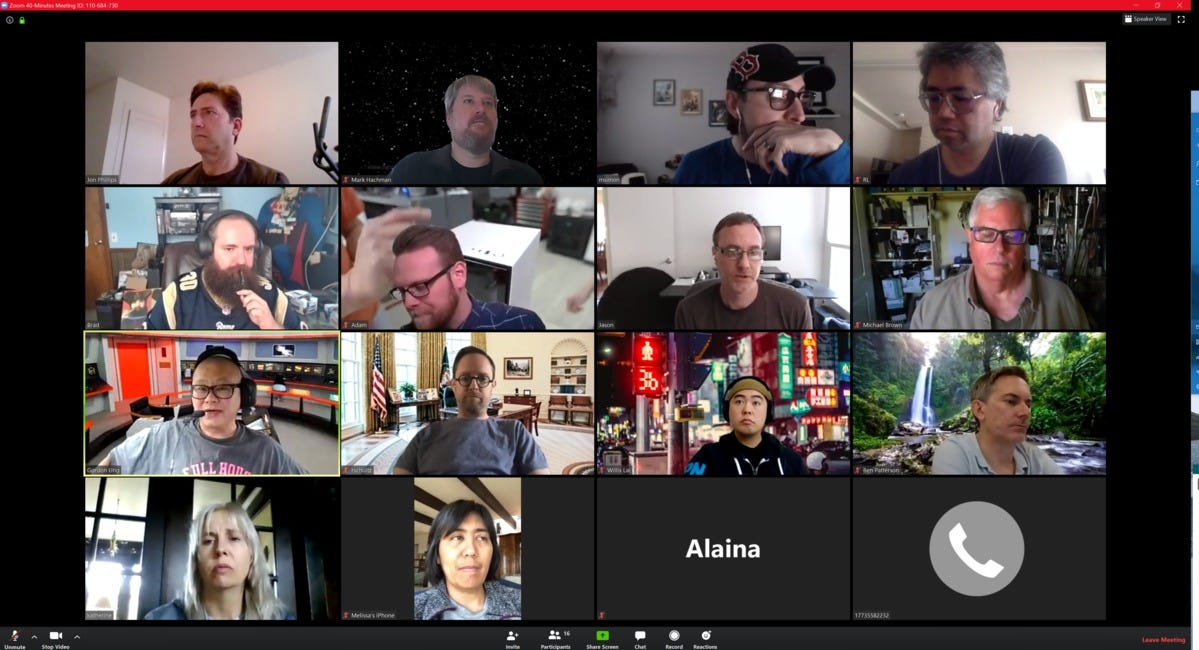
A webinar is an audio/video stream of content. For me, an event (and I like to interchange the word “experience”) is dramatically more than that. An event experience in real life (IRL) gives me human connection and interaction. I meet people and they meet me. I feel part of a community. I’m inspired, I explore new things, I feel energy, and there are lots of sensory dynamics: audio, visual, physical, etc. When done well, it’s actually an overwhelming holistic experience that leaves me excited and influenced. I don’t feel that way on a Zoom Webinar or anything like Zoom. I’m sorry, I just don’t. I certainly appreciate high quality topics of conversation from a compelling speaker via video conference but I’m left missing so much from an event experience perspective.

I’ve spent some time reflecting on why that is exactly and I’ve identified 3 fundamental elements of an event experience that I believe are critically important and may be so subtle that we’re forgetting about them right now as we scramble quickly.

1. Presence

Presence is that feeling of being physically, emotionally and mentally engaged as an attendee rather than simply being a viewer or consumer of what’s going on. I’m actively present. ????????‍ Think about it this way, is watching a TV show an event? That’s comical to even consider but it gets at the root of my point. Presence is something that most event producers are really struggling to offer attendees with virtual events. A few suggestions and things to think about here would be to look for solutions that allow attendees to interact and network with each other on their own (and I don’t mean a slack channel). And if your event has any decent sized crowd (50+ people), you need to think about how all those people could actively participate in the conversation. How can you help facilitate many conversations at once? Note: this is incredibly difficult and expensive in most video conferencing based solutions.

2. Community

Feeling and observing that you are a part of a connected community is a critical part of an event experience.

Two important thoughts here: First, event community is built by a common reason for attending the event (i.e subject matter, speaker, host, expected outcomes/meeting new people). The good news is that this is achievable with most any virtual event solution if you have compelling content to offer. For example if all the people that register and attend a webinar want to attend because of the topic and the speakers involved than there is a built in sense of community there for you.

But my second thought is more complex and harder to achieve virtually. At real life events, I can look around the room/venue and see all the other attendees. I can immediately feel and see the community around me. I can walk up to other attendees I don’t know. I can introduce myself and they can do the same. I can “run into” colleagues and old friends. The community comes alive for me. I can see it and feel it. It’s that emotional buzz of being in “the crowd”.

Think about that, if I couldn’t actually see other attendees around me wouldn’t it feel like I’m just sitting alone at an event? With most virtual event solutions you’re only presented with a “number of people online” in the top left corner of the App while you watch a presentation or at best you can see however many faces fit on your Zoom grid layout. I can’t see dozens, hundreds or thousands of people with me in my event community. We are social beings, especially when it comes to attending events. This is important to us and without it the experience falls very flat.

Video Webinar

3. Autonomy

Event autonomy is having the ability to pick and choose what you want your event experience to be as an attendee: which sessions you attend, who you meet, how long you stay in specific areas, what you interact with, which exhibitor booths you visit, which performance to catch, the ability to explore new areas of the venue (i.e walk around), etc. For comparison, the opposite of event autonomy would be forcing attendees to sit and watch a single video stream speaker after speaker in a linear fashion. Said another way, think about how much your feet hurt after a long day at a conference. That’s because you are selectively moving around a ton. That’s autonomy at work.

Autonomy is a significant challenge for most virtual event solutions because there is no concept of a venue and no way to move. I’ve found that you can really only accomplish this with avatar-based solutions that allow attendees to move around virtual venues and talk/interact as they go. In these environments attendees are back in the control seat and every single person comes out of the event with a unique, personalized, and memorable experience. That’s exactly what we are looking for as event producers.

There are certainly more than 3 foundational elements of great event experiences but those 3 are top of mind for me right now as I’m feeling Zoom fatigued, under engaged, and quite honestly bored as hell, at most virtual events I attend.

I share these thoughts and perspectives from almost 20 years in the event industry. I’ve produced hundreds of events myself and worked with many others who have produced thousands. I’m an experience technologist and am inspired by the new challenge and opportunity our industry has in front of it. Most recently I’ve been deeply entrenched in the emerging technologies for virtual event experiences. I’ve learned an incredible amount in a short amount of time. . For me, I’ve landed on an avatar-based solution as best in class virtual event experiences for many of the reasons discussed above. If you’d like to learn more, you can request a private tour by clicking here. My ask of you is please don’t get lazy on event experience. Going virtual shouldn’t lower the bar, it should raise it. Your attendees are expecting more.

Read more
    12
logo_eventfarm001

About Event Farm

Event Farm is a toolset of event engagement applications designed to promote brands and engage targeted audiences at in-person, virtual, and hybrid events.

Solutions

  • Registration
  • Check-In
  • Engagement
  • Attendee App
  • Exhibitor Experience
  • Zoom
  • Event Safety

Company

  • Pricing
  • Request Demo
  • Blog
  • Resources
  • Careers
  • Partners
  • Press & Media

Support

  • Event Farm Log-In
  • Support Knowledge Base
  • Platform Status
  • Contact Support
  • Contact Sales: sales@eventfarm.com
  • Email Us: hello@eventfarm.com
  • Legal Terms

Privacy Policy | Legal Terms | Terms of Service

©2024 JRNI. All Rights Reserved

in