Event Farm
  • Solutions
    • Registration
    • Check-In
    • Engagement
    • Attendee App
    • Exhibitor Experience
    • Zoom Events
    • Event Safety
    • COVID Testing
  • Partners
  • Blog
  • Login
  • Request Demo
  • Pricing
Event Farm

Posts

Home / Posts
16Jun

We need a hard reset to properly define the word “event”

June 16, 2020 Ryan Costello Posts 256

Without question, the event industry has been turned upside down. Nearly all in-person events in the world have been canceled for the last 3–4 months and no one is certain when/if they are coming back in full capacity. In reaction, the event industry (including me) has scrambled to find alternative solutions. We are scrambling to keep our jobs and to keep events happening.

What’s interesting is that my inbox is flooded with “virtual event” invitations. I’m sure I’m not alone. I’ve even spoken at several of them. So the good news here is that “events” are still happening which validates the foundation of our business that human beings need/crave coming together at events to interact, engage, network, learn, and do business. The not so good news is that I’m concerned we may have scrambled a bit too quickly. Our definition of an “event” or “experience” has broadened so dramatically and so quickly that I’m worried we’ve lost focus on what a true event experience entails and why we work so hard to create them.

Let me just say it…..A webinar is not an event.

A webinar is an audio/video stream of content. For me, an event (and I like to interchange the word “experience”) is dramatically more than that. An event experience in real life (IRL) gives me human connection and interaction. I meet people and they meet me. I feel part of a community. I’m inspired, I explore new things, I feel energy, and there are lots of sensory dynamics: audio, visual, physical, etc. When done well, it’s actually an overwhelming holistic experience that leaves me excited and influenced. I don’t feel that way on a Zoom Webinar or anything like Zoom. I’m sorry, I just don’t. I certainly appreciate high quality topics of conversation from a compelling speaker via video conference but I’m left missing so much from an event experience perspective.

I’ve spent some time reflecting on why that is exactly and I’ve identified 3 fundamental elements of an event experience that I believe are critically important and may be so subtle that we’re forgetting about them right now as we scramble quickly.

1. Presence

Presence is that feeling of being physically, emotionally and mentally engaged as an attendee rather than simply being a viewer or consumer of what’s going on. I’m actively present. ????????‍ Think about it this way, is watching a TV show an event? That’s comical to even consider but it gets at the root of my point. Presence is something that most event producers are really struggling to offer attendees with virtual events. A few suggestions and things to think about here would be to look for solutions that allow attendees to interact and network with each other on their own (and I don’t mean a slack channel). And if your event has any decent sized crowd (50+ people), you need to think about how all those people could actively participate in the conversation. How can you help facilitate many conversations at once? Note: this is incredibly difficult and expensive in most video conferencing based solutions.

2. Community

Feeling and observing that you are a part of a connected community is a critical part of an event experience.

Two important thoughts here: First, event community is built by a common reason for attending the event (i.e subject matter, speaker, host, expected outcomes/meeting new people). The good news is that this is achievable with most any virtual event solution if you have compelling content to offer. For example if all the people that register and attend a webinar want to attend because of the topic and the speakers involved than there is a built in sense of community there for you.

But my second thought is more complex and harder to achieve virtually. At real life events, I can look around the room/venue and see all the other attendees. I can immediately feel and see the community around me. I can walk up to other attendees I don’t know. I can introduce myself and they can do the same. I can “run into” colleagues and old friends. The community comes alive for me. I can see it and feel it. It’s that emotional buzz of being in “the crowd”.

Think about that, if I couldn’t actually see other attendees around me wouldn’t it feel like I’m just sitting alone at an event? With most virtual event solutions you’re only presented with a “number of people online” in the top left corner of the App while you watch a presentation or at best you can see however many faces fit on your Zoom grid layout. I can’t see dozens, hundreds or thousands of people with me in my event community. We are social beings, especially when it comes to attending events. This is important to us and without it the experience falls very flat.
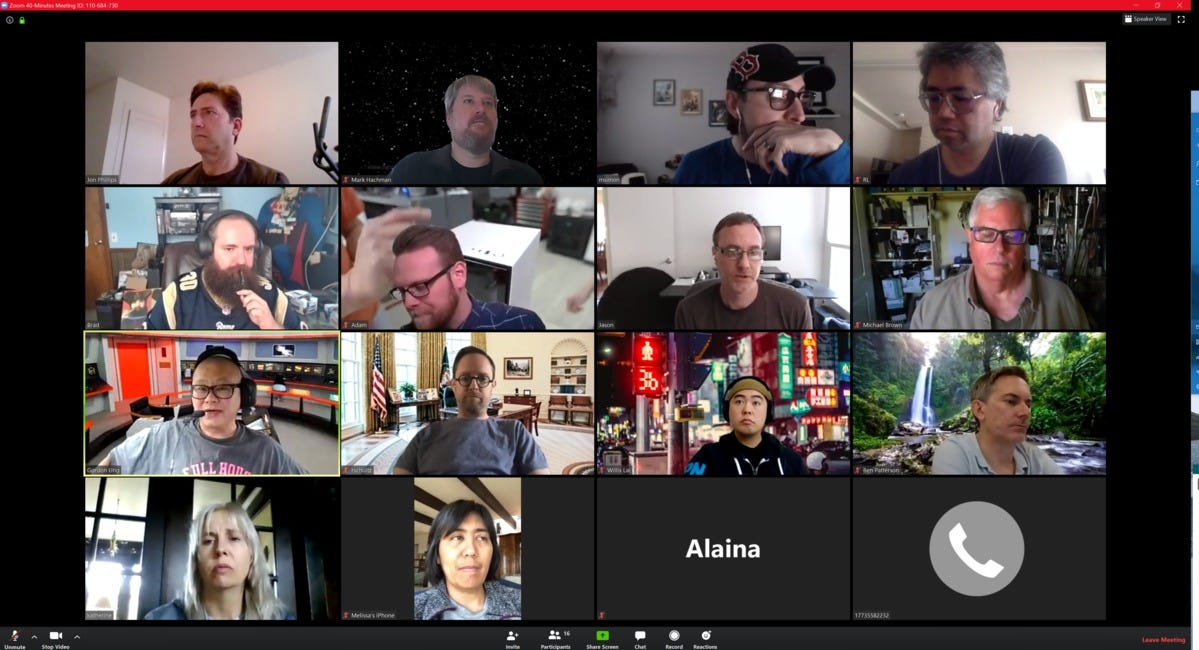
Video Webinar

3. Autonomy

Event autonomy is having the ability to pick and choose what you want your event experience to be as an attendee: which sessions you attend, who you meet, how long you stay in specific areas, what you interact with, which exhibitor booths you visit, which performance to catch, the ability to explore new areas of the venue (i.e walk around), etc. For comparison, the opposite of event autonomy would be forcing attendees to sit and watch a single video stream speaker after speaker in a linear fashion. Said another way, think about how much your feet hurt after a long day at a conference. That’s because you are selectively moving around a ton. That’s autonomy at work.

Autonomy is a significant challenge for most virtual event solutions because there is no concept of a venue and no way to move. I’ve found that you can really only accomplish this with avatar-based solutions that allow attendees to move around virtual venues and talk/interact as they go. In these environments attendees are back in the control seat and every single person comes out of the event with a unique, personalized, and memorable experience. That’s exactly what we are looking for as event producers.

There are certainly more than 3 foundational elements of great event experiences but those 3 are top of mind for me right now as I’m feeling Zoom fatigued, under engaged, and quite honestly bored as hell, at most virtual events I attend.

I share these thoughts and perspectives from almost 20 years in the event industry. I’ve produced hundreds of events myself and worked with many others who have produced thousands. I’m an experience technologist and am inspired by the new challenge and opportunity our industry has in front of it. Most recently I’ve been deeply entrenched in the emerging technologies for virtual event experiences. I’ve learned an incredible amount in a short amount of time. . For me, I’ve landed on an avatar-based solution as best in class virtual event experiences for many of the reasons discussed above. If you’d like to learn more, you can request a private tour by clicking here. My ask of you is please don’t get lazy on event experience. Going virtual shouldn’t lower the bar, it should raise it. Your attendees are expecting more.

Read more
05Apr

The trap of personalized experiences at scale

April 5, 2019 Ryan Costello Posts 165

Last weekend, like most weekends, I started Saturday at my neighborhood coffee shop. This is how it usually goes: I walk in, set my stuff down at an open table, then order my Americano.

This weekend wasn’t too different. Except by the time I was ready to order, the barista had already placed an Americano on the counter with a post-it stuck to it: “Lauren :).”

Made my day. I paid for my Americano with an extra big tip.


If I described this story in marketing buzz words, I’d say I had a personalized experience, which is true. But the problem with buzzwords is they’re used too generally and in different contexts, and it becomes difficult to understand what, exactly, someone means when they use them.

I think my coffee shop experience should be the gold standard of a personalized experience, so it’s what I’ll use to define the term. Anyone hoping to create something similar should:

  • Understand the context
  • Anticipate the need
  • Add a human touch

And because we’re talking about marketing and sales, the goal should be that all of these things add up to more revenue.

So what happens when we take a personalized experience and try to deliver it at scale?

The whole thing falls apart. Not only logistically, but emotionally, too.

But that’s what marketers are being asked to do right now: deliver personalized experiences at scale.

It’s a trap—because when we try to scale something, we don’t rely on humans. We rely on technology. And you cannot take something that relies on a one-to-one human relationship and turn it into something that technology does for us.

Personalization at scale is an oxymoron. Some are accepting it as a challenge.


Part of the problem is that we use “personalization” too broadly and freely. If we agree to the definition of a personalized experience that I attempted above, we can also outline a number of things people might mean when they talk about personalization:

  • Participation
  • Humanization
  • Customization

When we about scaling within each of these categories, things start looking up!

  • We can encourage participation at scale, whether it’s polling attendees at an event or encouraging people to start a conversation with a chatbot.
  • We can do humanization at scale. Think about this as the inverse of personalization: instead of trying to wrap each member of your audience in a cocoon of personalization, invite them to understand you as a human. You’re more than the company you represent. Your audience knows that, so let them experience it.
  • We can create customization at scale. This happens all around us. Think about Spotify’s Discover Weekly playlist, or the products you can customize with Nike ID, or brands like Care/Of that invite you to take a quiz so they can recommend a specific product that best fits what you need.

Thanks to technology, all of this is possible at scale.


This isn’t to say that we should ditch the idea of creating personalized experiences, but we have to be more accepting of the limitations that come with personalizing anything. We can’t do it at scale—but we don’t have to do everything at scale.

We can and should spend time creating high-touch, high-engagement experiences for the people in our audience who will benefit from them the most and help us reach marketing and sales goals.

At Event Farm, we think the channel that most effectively enables personalization is in-person events. There are stats that back up our inclination, and we make tech to help you enable it—but we don’t pretend you can fully automate an event or rely solely on technology to host one.

Read more
28Mar

What is event marketing?

March 28, 2019 Ryan Costello Posts 284

On the surface, event marketing sounds fairly straightforward: you host an event to promote your business.

It’s kind of like pulling a good shot of espresso or making a salad as well as sweetgreen does—except on a much larger scale. It sounds super doable, and then you try it and quickly realize it’s difficult. To help marketers think through (and potentially explain to others) what a successful event is, we created this guide. In our experience, event markers often have too much to do and not enough time for anything but the bare minimum—and we want to help make the case that they might need more resources, more help, more time.

So what is event marketing? Here’s our one-sentence answer:

Event marketing is the practice of hosting in-person experiences that communicate the value of your organization to influence marketing goals.

We’ll unpack (and greatly expand on) that definition throughout this guide. And as you’ll see, building muscle around a solid event strategy is worth it. The guide gets a little lengthy, so here’s a birds-eye view of what it’ll cover:

  1. Breaking down the event marketer’s role
  2. Benefits of events vs. other marketing channels(
  3. Event size, your audience and “the funnel”
  4. The connective tissue: experiential communication

Let’s get to it!

Breaking down the event marketer’s role

In case you’re so down-in-the-weeds that you need a big-picture reminder. OR you’re trying to break it down for people who just don’t get it.

Event marketers oversee every aspect of an event: logistics planning, audience development, topic development, partnerships, experience production, influencing marketing goals, and more.

That’s a lot! We can break these tasks down into three broad categories:

  1. Logistics management: This is the stuff you simply must do for an event to happen. You have to find a venue, a date, maybe hire caterers, and make sure you have signs that tell guests where the restrooms are. You need a registration site and invitations. These are the necessary details for the event to just work.
  2. Experiential: This is the connective tissue between event management and event marketing. You’re not just thinking about the fact that you have a venue, but you’re thinking about how guests will experience that venue. You’re thinking about how you’ll communicate with attendees. (Event app? Texting?)
    Just like digital marketers focus on creating a positive website experience, event marketers need to think about a good event experience. You take the bare minimum and make it better so your guests get something out of the event—and are, in turn, more likely to help you reach marketing goals.
  3. Marketing and influencing business: You focus on experiential so you’re attendees have a positive branded experience—they associate good things with your company and are more likely to buy from you. This doesn’t just happen with a good experience, though. It has to be strategic. How are you laying the groundwork leading up to, during, and after the event? What information are you giving guests, what story are you telling them, that’ll help them understand the value of your product/service?
Benefits of events vs. other marketing channels

A bunch of convincing stats, in case you need them.

Everything I just explained means events are a lot of work. So what’s the upside?

First of all, let’s think about the obvious:

  • Your attendees didn’t come to your event by accident
  • Your audience comes to your event prepared to give you their attention for an extended period of time — without the typical workplace distractions

There is no other marketing channel that simultaneously accomplishes those two things. And there’s evidence that it pays off:

Events create positive brand sentiment and foster product understanding

  • 80% of attendees said that live demonstrations help define their purchasing decision.
  • 65% of attendees said live events helped them have a better understanding of a product or service.
  • 84% of attendees say that they have a more positive opinion about the company, brand, product or service being promoted after the event

Events increase and accelerate sales

  • 98% of users feel more inclined to purchase after attending an activation
  • 70% of users become regular customers after an experiential marketing event

Events contribute to other marketing initiatives

  • 75% of content marketers say that in-person events are the most effective content marketing strategy
Event size, your audience and “the funnel”

Talkin’ bout audience and ROI—so, marketing.

Biggest is not best

The best type of event depends on your business, but for most companies, small-to-medium sized events are probably the smartest way to go. Large conferences can be great, but they require huge budgets and months of planning. Smaller events are more accessible and are equally (if not more) impactful per attendee.

As long as you’re being strategic about who you invite, the number of people you’re inviting becomes less important.

So, who should you invite?

If the most impactful events are smaller ones, don’t “cast a wide net” with your guest list.

Instead, take a targeted approach and invite people who:

  • Your company already has a relationship with (i.e., isn’t a “new lead”), or
  • Data tells you would definitely be a good fit for your product or service

Your event and the funnel

The funnel! Marketing and sales’ favorite metaphor.

Smaller, more targeted events should sit somewhere between the middle and bottom of the funnel. You’re probably not going to close deals at the event itself, but the event should serve as a launchpad for closing deals with attendees.

The connective tissue: communication

Let’s take a quick pause to reorient ourselves to our central question: What is event marketing? So far we’ve established that we absolutely need event logistics to make an event happen, and we know that events can 100% influence marketing, sales, and business goals.

But how do you jump from an event that’s got solid logistics to an event that influences revenue?

The answer: Communicating through experience.

How do you communicate through experience?

There are a lot of ways to do this. We can’t cover every possible example, but here are some ideas:

  • First, the OG methods:
    • Human-to-human conversation! Events make this possible—which is part of the reason they’re such a powerful marketing tool.
    • Panel discussions and speaker sessions
  • The tech-powered methods:
    • Encourage attendees to take and share photos. People love taking pics and posting them on social media. Events not only encourage attendees to take photos—they also serve up IRL content for your attendees to capture and share. This not only creates a positive brand experience for your attendee, but it also extends your social footprint. #2birds1stone
      With Event Farm EFx, you can take photos for your attendees, apply custom event filters, and text photos to the attendees in the picture.
    • Create attendee teams to break the ice and start the conversation. Depending on the size of your event, you can manually group your attendees. EFx Teams makes it possible to do this at scale. With the touch of a button, EFx will place your attendees in groups of 3-4 and text each attendee the names of their teammates.
      The teammates might not (and probably won’t!) know each other, but that’s part of the fun: they’ll start asking around to find their group. Once they’ve found each other, you’ve helped them break the ice and can then post questions relevant to the event topic for them to discuss.
    • Make speaker sessions and panel discussions more interactive with polling. You can poll your attendees whenever—but it’s especially powerful when you’re trying to make a speaking session more interactive. Polling turns a traditionally passive experience into something that’s more active. It also allows you to understand how each attendee responds to a poll, which is marketing data that’s something powerful beyond the event itself.
    • Create interactive experiences through wearable tech*.* Wearable tech activations can do a lot. You can—and Event Farm customers do—get really creative. A popular activation that’s used across the board, no matter the event type, is content delivery.
      Here’s how it works:
      Attendees interact with content on kiosks set up around the venue. If there is content they want to save and reference later, they scan their NFC-powered wristband at the kiosk and have the content delivered to their inbox.
      (If you’re interested in learning how wearable tech could work for your specific event, we’re happy to talk about what else is possible. Reach out to us here.)

The experiential component of your event is where you tie the bare bones of the event to the stuff that matters. It’s arguably the most important part. What I just laid out is important—but it’s a template of tactics you can use. Ultimately, what you’re communicating through these channels is the most important part, and that’s up to you.

Read more
21Mar

What makes a VIP event worth it?

March 21, 2019 Ryan Costello Posts 274

We often equate VIP events with the doling out of goods: dinners at a fancy restaurant, front-and-center seats at a baseball game, a VIP lounge at a conference.

If you’re hosting a VIP event, there’s a good chance it will come with a heftier price tag. But to make that price tag worth it, you have to put time and energy into creating value that can’t be tied back to the number of dollars you’re forking over. Take these hypothetical events as examples:

Hypothetical Event #1: Your guests like the event

Let’s say you’re renting out an entire restaurant to host a dinner for 40 high-value prospects and customers. The restaurant is fancy and staffs its own sommelier—so the restaurant itself is compelling enough to entice your guests.

You send out invitations—free dinner and drinks at a private gathering. Delicious food. A room full of industry peers. You hit your registration goal and spend the rest of your time making sure event logistics are spot on.

The event comes, everything goes smoothly, and your guests really like the event. Great!

Except you want them to like more than the event. You want them to like you and your company.

Hypothetical Event #2: Your guests like the event and like you

Imagine the same setup, except this time you also do something extra—you treat your guests better than they expect to be treated, even though you’re already treating them to a nice dinner with smart people.

What does that look like? It could be a lot of things, but Event Farm is an event tech company—so we like to use technology to anticipate and cater to what our guests need and want. Here’s an example of what that might look like for your VIP dinner:

  • When guests RSVP on your event website, you’ll ask them the standard questions: Name, email, etc. But you’ll also ask about their drink preference from a menu of cocktails.
  • When each guest arrives, you’ll activate an NFC-powered wristband that knows each guest’s drink preference.
  • As guests make their way to the bar, they’ll scan their wristband at EFx Smart Bar, a kiosk that takes orders and queues them for bartenders. Smart Bar will verify that the guest still prefers the drink they selected during registration, and the order will be sent to the bartender.

Smart Bar adds a touch that exceeds your guests’ expectations. It’s personalized and streamlined, and your guests know you set it up—it’s not something the restaurant did for you. The end result is that your guests like the event and like you.

Sweet. A step up from Event #1. But if you want your event to lead to more business for your company, your guests have to like you and understand the value of your product or service.

So…

Hypothetical Event #3: Your guests like the event, like you, and understand your company’s value

Imagine the same set up as Event #2. You’re hosting a nice event, taking care of the logistics, and exceeding your guests’ expectations.

But for this event, you’re going to add one more layer: Your guests have to know why they’re at your company’s event. They have to understand the value of your product or service.

Now, you’re probably thinking, this is a lot. I hear you—just taking care of event logistics is a lot, and I’m skimming right by logistics. But your guests’ attention is valuable. People might end up on your website by accident, but they’re not walking into your VIP event by mistake. A VIP event is full of the right people, in the right place, at the right time. Making the most of that does require a lot.

Your guests’ attention is valuable. People might end up on your website by accident, but they’re not walking into your VIP event by mistake. A VIP event is full of the right people, in the right place, at the right time.

So how do you do it?

The specifics will be different depending on the goal of your event and the product/service your company offers. In general, though, you can think about it as preparing the humans.

Preparing the logistics doesn’t pay off if you don’t also prepare the people who are coming. In the days and weeks leading up to the event, encourage attendees to engage with the narrative your event will tell—this is where you start incorporating value that goes beyond the dollar amount you’re spending.

For something like a VIP dinner, you might invite guests who hold similar roles at different companies. They’ll probably get a lot out of talking to each other, which means you might want to set up attendee groups and introduce group members to each other before the event begins. You might also send articles relevant to your event and ask attendees to discuss the article’s ideas once they’re in person.

For our own events at Event Farm, we sometimes text attendees an article during the event using EFx Texting, or we’ll introduce attendees to each other using the EFx Teams module.

Whatever conversation you facilitate and however you do it, help each guest think through the problem they have that you might be able to help them solve. If you’re able to weave that into an experience that exceeds expectations, you’ll set up guests to like you and understand the value your company provides—which makes the energy and price tag worth it.

Get Real! That’s the name of our weekly newsletter, where you’ll get reminders about posts like this and links to things we’re thinking about. Subscribe here.
Read more
14Mar

We should set a higher bar for networking events. Here’s how to start.

March 14, 2019 Ryan Costello Posts 263

The internet, it seems, has set a low bar for networking events. Do a few googles and you’ll see what I mean:

  • 15 Ways to Overcome Awkwardness at Networking Events
  • Stop Feeling Awkward, Nervous, and Lonely at Networking Events
  • 17 Tips to Survive Your Next Networking Event

All of the articles are aimed at giving attendees a pep talk so they have enough gumption to take control of their networking experience. Even if someone uses all the tips the articles offer, the best they can apparently hope for is something tolerable. Networking events are good for you, the articles say, even if the experience itself kind of sucks.

As the people planning events, this should make us uncomfortable. We can and should aim higher—because I don’t think we want to host the experiential equivalent of a rough kale salad.

Hosting is active, not passive

To make any event better, we have to focus on what attendees need. For networking events in particular, attendees need hosts to take control and influence how attendees interact with each other. To give you an idea of what I mean, let me take a quick detour—I promise it comes back to networking events:

I recently “binged” The Marvelous Mrs. Maisel. I mostly liked it (8.5/10, FWIW), but something about it also made me a little uneasy.

If you haven’t see it, here’s the gist of the series (without spoilers): Midge Maisel, an uptown Manhattan housewife, launches a secret career as a stand up comic after her marriage falls apart. Midge is smart, pretty, and a standup genius. She encounters some setbacks—she’ll occasionally bomb a set, and she frequently runs up against sexism. But more often than not, she doesn’t just overcome the setbacks. She confidently turns them on their head and transcends them.

A club manager is hesitant to hand over the mic because she’s a woman? Midge makes a point of talking about it during her set. An audience member heckles her? Like any good comedian, she takes them on and beats them with her wit. She commands attention. It is about her.

She’s good, she knows it, and she takes control of her environment in a way that most of us don’t want to take control. It reminds me of… the reason people don’t like networking. The idea of taking control of a group of people makes most of us uncomfortable.

Hosting an event is about more than gathering a group of people and letting them figure it out. If you’re going to host an event, host it.

That’s going to be true of anyone in any group, including both the host and the attendees at a networking event. No one wants to be domineering, but everyone wants someone else to take control and give the group some direction. The event organizer needs to be that person.

That doesn’t mean a host needs to be exactly like Midge or any standup—a host doesn’t need to take center stage and keep it. But hosting an event is about more than gathering a group of people and letting them figure it out. If you’re going to host an event, you have to host it.

Real advice for making networking better

For networking events in particular, the general goal is for attendees to meet people with similar interests and have conversations with those people.

The host’s job is to make sure each attendee—even the quieter, younger, or less experienced ones—is set up to reach the goal of the event. Every event is different, but there are a few broad guidelines we’ve found useful:

  • Introduce attendees to each other. It doesn’t really matter how you do this, as long as you do it for everyone. If your event is small, maybe you introduce guests via email before the event begins and ask them to find each other once they’re in person. At our Connection Makers series, we use EFx Texting to group attendees. Each guest receives a text message with the names of their group members and are asked to find those people. We intentionally don’t give them any other guidelines—they have to talk to each other to figure out what to do and find their people.
  • Supply guests with a prompt they can use to start the conversation. Again, this can be anything, as long as it starts conversation. If you’re hosting a happy hour after a panel discussion, maybe you prompt attendees to talk about what they found most interesting during the panel. Or maybe they have to play 20 questions to determine what each person in the group does. Whatever! As long as it helps attendees begin a conversation with one another without having to talk about the weather.
  • Remember that people appreciate guidelines. All of this might cause some self doubt. What if they don’t want to break into groups? Or don’t want to talk about the prompt? Honestly, maybe some of them won’t want to do it at first, but there’s a reason they came to the event. They signed up and and showed up because they wanted to be with a group of people; they wanted to meet new people. They will be happy to have done it, and they will appreciate the fact that you gave them the guidelines to do something that can be difficult.

“Networking” is a nebulous term and activity. You can’t control everything that happens when a group of personalities convene, and you don’t have to overthink it. But you can and should put up some guardrails—for the benefit of you and your attendees.

Get Real! That’s the name of our weekly newsletter, where you’ll get reminders about posts like this and links to things we’re thinking about. Subscribe here.
Read more
12Mar

The one principle for planning events: don’t overthink it

March 12, 2019 Marketing Team Posts 265

In case you missed it (which I’m pretty sure you didn’t): South by Southwest is happening right now. If you work in music, film, marketing, tech, events (the list goes on…), approximately every third tweet and every fifth email will mention the conference/festival.

Twitter Screenshot

That’s OK: SXSW brings together some of the best in business and culture to share ideas that are worth talking about and taking inspiration from. But if you’re like me, hearing from the best comes with pros and cons.

The upside is obvious. There’s usually a good reason that people are the best in their industry: they have good ideas and know how to make them happen. Hearing those ideas is an opportunity to learn something.

But the best also set the bar really high because that’s where they play. They have the experience, expertise, and resources to reach the high bar because they’ve already climbed pretty far up the ladder.

That’s where things get tricky. A lot of us aren’t close to reaching the high bar, even though we might want to. Whether you attend SXSW or just experience it through the internet, the excitement of the sprawling event has the potential to give us an inflated sense of what we’re capable of right now. But the buzz will wear off, and we might feel discouraged by the distance between where we are and where we want to be. We’ll start to overthink it.

Overthinking is a symptom of perfectionism which, of course, leads to inaction. Seth Godin says it better than I can:

Perfect is the ideal defense mechanism… Perfect lets you stall, ask more questions, do more reviews, dumb it down, safe it up and generally avoid doing anything that might fail (or anything important). You’re not in the perfect business.

If you’re reading this blog, you probably host (or are interested in hosting) events, which means the very size, scale, production, and existence of SXSW might make you feel like you’re behind. It’s easy to forget that today’s conference—which brings in over 75,000 attendees, 5,000 speakers, and houses over 2,000 sessions—started over 30 years ago with just 700 attendees.

The organizing principle behind the first SXSW is more instructive than dissecting the complexity of the event today. Back in 1987, the founders simply wanted to expose Austin’s local creative and music communities by bringing people together “to meet, learn, and share ideas.” They let that principle guide what they did with the limited resources they had.

The point is: figure out your own organizing principle and start with what you have. This isn’t revelatory; in fact, there are variations of clichés that get at the same idea:

  • Start where you are.
  • Perfection is the enemy of the good.
  • The definition of insanity is doing the same thing over and over and expecting different results.

Sometimes clichés are worth revisiting, especially for this audience in the face of this year’s SXSW. As Product Hunt’s Daily Digest noted, “SXSW is shifting away from a place for startups to launch apps. Big tech companies focused more on branded experiences.”

As you hear more about Snap’s “Snap House” and Patreon’s “House of Creativity,” appreciate the events for what they are, but don’t let it push you into perfection paralysis. The ultimate goal of any event should be getting people with common interests together to discuss ideas in person, which is itself novel in today’s digital world.

If you get people together face-to-face, it’s a success. The more complicated stuff can come later.

Read more
09Mar

Understand that events are user experience

March 9, 2019 Marketing Team Posts 266

The first and only time I went to SXSW Interactive was in 2007, the year Twitter launched. As the story goes, they melted through a dozen servers over four days keeping up with the traffic. Twitter was not the only brand bringing literal and figurative heat to the conference that year, though. Dozens of brands (probably more now) chose SXSW Interactive as fertile ground for their big debut. And why not? Out in the real world is the place where you can showcase the real humans and values behind your work.

As someone in the user experience and design fields, I spend a lot of my time thinking about how interactions can articulate what a brand stands for. Do menus appear slowly, and languidly—like the box that lets me know my iPhone wants to connect to my AirPods? Does an app shower my screen with coins as a reward for checking in, like Swarm? In both cases these experiences are communicating intent and brand signifiers: Apple’s calm coolness or Swarm’s funny irreverence. In fact, working on app and software design for so long can make you forget that, as great as these experiences are, they’re substitutes for IRL experiences that we don’t get to have much anymore.

phones-a1f56e9d-4f1e-4409-a8f3-79223a2a593d
A tale of two experiences: confident versus playful

As Twitter and so many others discovered at SXSWi all those years ago, the real magic is in being there; for companies making apps, it’s the culmination of all the small choices you’ve made in your code and designs. For marketers, it’s where all the messaging and the email and social campaigns pay off. Event marketing is probably one of the most overlooked and most critical parts of any organization. If you’re working really hard on a product, a community, or a cause but you don’t have events in the hopper, you’re really only working half of the problem.

In our experience, clients find it easier to hold events when they have a reason to do so—like to announce a product, or drum up business. But some of the most successful events are those built around community. Salesforce, Github, Apple—all famously host in-person gatherings geared towards developers every year. These events further each company’s ground game of being top of mind with those best in a position to promote them. But brand-building community events obviously aren’t the exclusive domain of tech companies. Non-profits, political causes—even web communities like YouTube and Dribbble—have had success gaming the format of developer events if not the content. The come-as-you-are ethos of a hackathon lends itself surprisingly well to a whole host of other events.

Events like SXSWi are famously not fussy. You bring yourself and your laptop, and listen to people speak whose work you may already admire or follow (and maybe eat your weight in Austin barbecue). Viewed through this lens, where hosting an event only requires that the people that you call your customers bring themselves, event marketing starts to seem more manageable. Add in a management and access layer like Event Farm’s own free Check-In solution, and you can be one step closer to frequent events that bolster your brand. Maybe there isn’t even an agenda, or a high profile destination. Event Farm’s own Connection Makers event series happens in the bar next door to our Santa Monica office–where our technology is born and raised.

In person events are the difference between the feeling you get ordering coffee through an app every day, and the feeling of the barista knowing your name when you go into the store.

In person events are the difference between the feeling you get ordering coffee through an app every day, and the feeling of the barista knowing your name when you go into the store. They provide context and cohesion for your online activities, and allow customers to put a name with a face. But maybe most importantly they can be the first line of information gathering, giving you otherwise elusive first hand feedback that can help shape your product or service for years to come. And all of this because of a little old fashioned human contact, the original user experience.

We’re going to be bringing more posts like this one with even more tips on real-world ways to use Event Farm. You won’t want to miss them, so subscribe to get our email with latest posts and links to things we think you’ll want to know about.

Read more
16Jan

Retail brands are crushing it with experiential marketing. How can everyone else keep up?

January 16, 2019 Marketing Team Posts 154

Twenty years ago, Harvard Business Review declared that we were entering the experience economy. Today I’d argue that we’re in the heart of it — as a lifelong experiential technologist, I’m in my hay day in many ways. It’s a topic I’ve spoken on an overwhelming amount of times and more importantly it’s a topic that the most successful companies today are embracing BUT only some of us are successfully participating.

I’m going to explain, but first let me unpack the term “experience economy” a bit. It’s thrown around a lot — so what does it actually mean, and how is it shaping societal behavior?

In its’ most simplistic definition, the “experience economy” means we’re placing more economic value on “experiences” than anything else. There are many societal observations and data points that defend this, but just spend some time thinking about what you and your friends spend most of your discretionary money on (i.e not food or home goods), and you’ll likely come to the same conclusion.

Think — travel, concerts, festivals, events, marathons, restaurants, movies, ski trips, cooking classes, camping, yoga, vacations. The list of “experiences” goes on. Many people aren’t even striving to own large/traditionally-valued assets like a home or a car.

Sometimes I also think that the word “experience” is becoming synonymous with “Is it Instagramable?” I’m only half kidding..ha! If you’ve ever taken a sunset selfie to post on social media, you’re living in the experience economy. Welcome.

Beach selfies

And that brings me to the second point I’d like to make: As we continue to place higher value on experiences, we’re simultaneously expecting more and more from technology.

Think about how on-demand services like Uber, Lyft, Postmates and Netflix have shifted consumers’ expectations of convenience. We get what we want, when we want it, with just a click of a button. Those services work because the technology is powerful and the user experiences are world class. We’ve come to expect everything to work that way. We’re even starting to demand it.

And guess what? It’s only going to continue.

“As technology innovation cycles decrease, consumer expectations will increase at an equal or greater rate.” — Ryan Costello

When you start paying close attention to these two trends — the increasing value of experiences and the increasing expectations surrounding technology — you start to see that they’re working in concert. They’re dependent on each other.

So if we’re going to successfully participate in and cash in on the experience economy, we have to incorporate technology. And — this is important — it can’t just be any technology. It has to be technology that meets the expectations that the most innovative tech companies, like Uber and Netflix, are setting.

Now back to my original point: Only some companies are meaningfully participating in the experience economy because only some companies are getting the technology piece right. Cashing in on the experience economy isn’t as simple as “putting on an event” or “creating an experience.”

The companies that are meaningfully participating in the experience economy simultaneously harness the demand for experiences and the rising expectations of innovative technology.

The most obvious example I’ve seen is the dramatic shift in retail brands from traditional brick-and-mortar marketing approaches to experiential retail strategies. They’re creating exclusive opportunities for consumers to experience their brands and products. They produce PopUps, in-store events, personalize/customize products, produce large festival-like activations, have maker-spaces, and more. Everything is about immersing us, the consumer, in the company’s brand and giving us a deeper, personalized, authentic experience. And they are massively leveraging technology to power it all. When that happens, we buy more.

For some context, here are are a few great recent brand experiences that come to mind that have done this well: Adidas 747 Warehouse at NBA All Star Weekend, Refinery29’s 29 Rooms, Guess Jeans Farmers Market.

Festivals are another great example of consumers valuing experience and they only continue grow in popularity. Coachella, Bonaroo, Electric Daisy Carnival, etc., have all built massive followings and generate millions in revenue. These organizations invest most of their money in production. In fact, when you think about it, as an attendee you’re only actually buying production… ultimately you’re buying the experience. You very rarely take any physical product home. But while you were there, you’ll likely have experienced new products, took a lot of pictures, consumed content, created content, and connected with new friends on social media. Your only lasting takeaway is something digital, some sort of technology. Hmmmm.

Squad goals

Technology is essential to making the experience economy work, but, as I mentioned earlier, it’s quite a challenge and it’s actually done incorrectly a lot. The most common mistakes I see are:

  1. Creating something generic (i.e. not personalized) that feels transactional.
  2. Using technology to extract data from attendees with no value return to the attendee
  3. Not increasing the convenience of the experience

As far as Event Farm’s tech goes, I won’t bore you with a sales pitch, but I will share some fundamental guiding principles we bring to the engineering process that we feel are key drivers of creating experiences that work and exceed consumers’ expectations. Here are key questions we ask ourselves before building any application:

1) Is it authentic? It should either serve a convenience purpose (i.e., coat check, drink ordering, access into an area) or be something that doesn’t feel transactional.

2) Is it personalized? Will it feel like it was made for each person? Adweek actually covered this exact topic in more detail.

3) Does the attendee get value out of using it? At Event Farm, we call this “the rule of reciprocity.” If it’s only used to collect behavioral data (i.e. heat mapping, social media data scraping, etc.) you’re only receiving and not giving.

4) Would I personally use this at an event? Is it fun? Is it engaging? Is it human and something we would actually enjoy experiencing at an event? Note: It’s very easy to forget this when building experiential technology.

5) Is it engaging enough that attendees will want to use it more than once? If not, it’s probably too close to a transactional experience.

conference

At this point you should probably be thinking “That all sounds great, Ryan, but can you actually prove that this works?” The answer is YES. As an example, Event Farm recently powered an event experience that generated over $1 million in retail sales onsite for a brand at an event in 24 hrs. How? Engagement was overwhelmingly high because the technology built an authentic experience that exceeded consumers’ expectations.

A lot of our customers also sell products and services after events and track pipeline generation and deals closed post-event to measure their return. You probably won’t be surprised to hear that we do the exact same thing at Event Farm. I’ll leave the specific details on how this works for another post, but if you’re curious you can check out more content on Event Farm’s blog about this topic.

Until then, I’ll leave you with a challenge. The early adopters have already hopped on the experiential train and are seeing huge gains. It’s time for the rest to keep up. What’s your organization doing to accommodate and market to consumers in the boom of the experience economy? There’s no doubt we are all demanding more and it’s only going to continue.

Read more
08Nov

Retail’s One-Two Punch is Personalized Experiential—Here’s How Top Marketers Make it Happen

November 8, 2018 Marketing Team Posts 156

A decade ago, the future of retail looked grim. Companies like Amazon hit the scene offering convenience and immediate gratification — an irresistible combination with mass appeal. Brick and mortar couldn’t keep up.

At the same time, Millennials were realizing their buying power, and their purchasing preferences didn’t ease retail’s anxiety. The generation prefers to stream, rent, and experience — not own.

Traditional retail had to ask itself: Now what?

Fast forward to 2018, and the industry has loudly landed on its answer: A combination of personalized and experiential marketing, the two trends playing into each other.

To learn more about how the top retail marketers are thinking about experiential, we invited them to sit on a panel at an event of our own.

Below, I’ve highlighted the top themes that surfaced throughout the discussion. If you’re interested in listening to a recoding of the entire panel, email me and let me know. I’ll shoot you a link (I really will—my email address is lauren.taylor@eventfarm.com).

In the meantime, here are the top takeaways:

Listening to what your customers say is a form of data collection

When we think about data, we think about numbers. But the idea of listening as a form of qualitative data collection surfaced throughout the panel.

And if the goal is to host personalized experiences, listening to your audience to learn more about them makes sense. Alanna Marder, the Events Director at FabFitFun, explained that sometimes listening can even be the goal of an event or experience:

“We look at all of these retail presences like experiments and we treat them like opportunities to connect with our community,“ she said.

Not every performance metric is revenue-specific ROI. Starting November 26, for example, FabFitFun will open its first semi-permanent pop-up where the data they’re most interested in collecting is customer comments.

The pop-up “is really focusing on a simple retail model where we’re looking to connect with our customer,” Alanna said. “Honestly understanding the data and responses on that is the most interesting thing for us. The top line of our daily report is ‘Key Customer Comments of the Day’ because that’s really what matters to us in this specific circumstance.”

The pop-up will give FabFitFun a chance to better understand what a more permanent physical presence would look like for them, and to better understand what their audience is looking for next — something they’ll turn to Key Customer Comments to help them figure out.

Think about experiential as part of a larger strategy — and take risks

How do you create a 360-degree experience where online and offline channels work hand-in-hand?

First, start with a clear goal and align every piece of the puzzle around it. You might not initially know what every piece of the puzzle will look like — and that can be a good thing.

Katy Chapel, VP of Integrated Marketing at Fullscreen, a creative media agency, made the case for a process where you start with /something/ and let the results inform the next piece of your campaign.

For example, when AT&T approached Katy and Fullscreen with a specific goal — connecting with Gen Z — Fullscreen started by identifying a passion point that connected AT&T with that audience: cyber bullying.

“AT&T went really strong on saying ‘later to the hate,” Katy explained. “It created a movement and it created a community. People started talking and we started listening to what people were saying, and so we let that inform our next step.”

Katy’s team listened to Gen Z’s online chatter about AT&T’s campaign, and based on what they saw, the team built content to push the online — and eventually offline — conversation forward.

“Coming out of our content, we were starting to create these communities who… were actually starting to meet each other in person,” Katy said. “So then we let that inform how AT&T could authentically bring that experience to this generation without it being like, ‘Come into our store and buy an AT&T product, and upgrade to DirectTV while you’re at it.’”

Ultimately, Fullscreen and AT&T launched an in-person experiential campaign that would’ve been difficult to create had they not been so persistent with listening to their audience.

“It’s really using data to inform what you’re doing,” Katy said. “And sometimes that’s hard and you’ve gotta listen for a long time … and you’ve gotta take risks.”

The risk that Katy says retail brands must be willing to take?

“You’ve got to be willing to let into your retail space for not a shop-able experience, but to really let them have a place where they feel understood and comfortable.”

Sometimes incorporating personalization into experiential doesn’t tie directly to a revenue-specific campaign. It gets back to the audience poll we conducted at the event: brand love might be the best outcome. And in the case of AT&T, if they’re able to build brand love with the Gen Z, whenever that audience does need a phone, satellite TV or a high-speed connection — they know where to look.

Read more
29Oct

Canvas Through a Designer’s Eyes

October 29, 2018 Marketing Team Posts 167

When Gary Hustwit’s documentary Helvetica premiered in 2007, it almost immediately became part of a punchline in a joke about designers. An entire movie about a font? This was just too much for most people outside of the designer community, which I’ve been a part of or adjacent to for almost twenty years. But a lot has changed in the decade since its release.

Good design is more accessible than ever, but still hard to create for non-designers.

Products like the iPhone and the Tesla Model S—that seamlessly meld utility and high design—have almost accidentally given non-designers a fast education in design principles. In office teams, “design thinking” is an expected part of almost everyone’s job, not just those of us in black turtlenecks with Dieter Rams posters. More people seem to “know what they like” in terms of the designed world, and most of it is pretty good. Design nightmares are getting harder and harder to come by — except in most of the tools intended to let non-designers produce good design.

TL;DR, being a web designer is hard and frustrating.

Somehow, while we were making every car beautiful and every phone a stately sheet of black glass—while we were democratizing design to really be for everyone—we forgot to make a visual web design tool that isn’t awful. And before you question putting a web design tool on the same plane as a car or a phone, let me ask you: when was the last time you did anything of much importance without the internet? If you bought a car, got a marriage license, set up a doctor’s appointment, or contacted someone you love, you did it with the internet. You also used it to buy tickets to the last in-person event you attended. And you probably saw some Comic Sans and a gif of party hats when you did it. Admit it, it was awful.

As I mentioned above, I’ve been designing things of one kind or another for almost twenty years. My first website was built by hand in a text editor, and it was a process that was as full of pitfalls and bugs as it can be now. I had to coerce every different web browser into doing my bidding, and often failed. Designs looked frustratingly close to what I had in my head, but with no way to take them the last mile. As I grew as a designer and developer, I got better—but ugly bugs would still rear their heads. And then the smartphone age dawned, and most of my time was spent just making pages look right on everyone’s pocket computer. TL;DR, being a web designer is hard and frustrating.

And this is where Canvas comes in. A handful of “visual web design” tools have hit the market over the last five years or so. They promise big, amazing things but are built mostly for people who already understand all the complexities and inherent problems of doing design on the web, like me. No one has yet built a tool that does the two “holy grail” things a tool like this should do: allow non-designers to feel in control when designing something with tons of built-in complexity, and to generate code that is clean, and that programmers can work on without losing their sanity. Working in Canvas I feel, for the very first time in a long career, that it’s not only letting me build what I want visually—I can put things where I want, resize things, change colors, add images and code snippets of my own—but it has my back when it creates the code, too. Sites look letter perfect on my iPhone and iPad as well as all the laptops and TVs in the studio.

It’s such a quantum leap forward that it’s almost upsetting. My feelings about it sort of loop back to Helvetica, predictably. As a typeface Helvetica was made to give life and character to whatever it was used for, be it a hospital sign, a phone screen, or even the Nike logo. It’s a typeface for big corporations, but also for you and all your friends. Canvas is a high-octane power tool that does a seemingly impossible thing, fit for designers with decades of experience and novices who just want their event sites to make the right impression. Canvas, like Helvetica, gives more back than you put in. How many things can you say that about?

Read more
  • 12345
logo_eventfarm001

About Event Farm

Event Farm is a toolset of event engagement applications designed to promote brands and engage targeted audiences at in-person, virtual, and hybrid events.

Solutions

  • Registration
  • Check-In
  • Engagement
  • Attendee App
  • Exhibitor Experience
  • Zoom
  • Event Safety

Company

  • Pricing
  • Request Demo
  • Blog
  • Resources
  • Careers
  • Partners
  • Press & Media

Support

  • Event Farm Log-In
  • Support Knowledge Base
  • Platform Status
  • Contact Support
  • Contact Sales: sales@eventfarm.com
  • Email Us: hello@eventfarm.com
  • Legal Terms

Privacy Policy | Legal Terms | Terms of Service

©2024 JRNI. All Rights Reserved

in